

Description
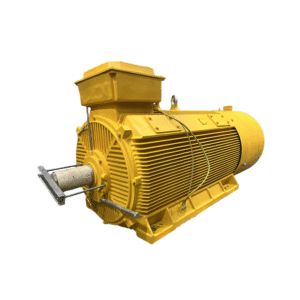
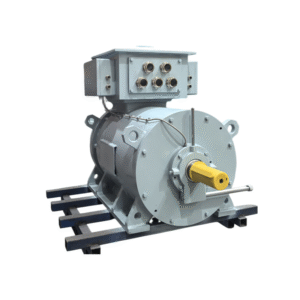
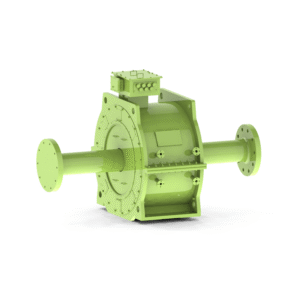
asynchronous propulsion motor
| Protection level | IP55,IP56 |
| Cooling method | IC81W, IC86W |
| Installation method | B3, V1 |
| Insulation class | Grade F, temperature rise assessed as Grade B. |
| Work system | S1 |
| voltage level | 220V~13800V |
| frequency | 50Hz 60Hz,Variable frequency applications |
| Power range | 710KW~10000kW |
| Synchronous speed | 1500、1000、750、600、500、375rpm |
Key Components:
Motor Frame: Rigid frame constructed of robust welded steel (EN 10025 – S235 JR). The frame is reinforced with side ribs. OMEC motors are designed for continuous operation and meet the vibration level requirements of IEC 60034-14.
Cooler: Mounted on top of the machine, a double-tube structure made of copper-nickel alloy (CuNi 90/10), equipped with a copper finned housing, a built-in leak detector, and certified by the shipping registry to comply with ship classification rules. Coolant can be fresh water or seawater, with appropriate additions of corrosion inhibitors, pH adjusters, and antifreeze depending on site conditions.
Heat Exchanger Data: Design pressure 6 BAR, test pressure 10 BAR, maximum glycol content 30%, water type fresh water or seawater (salt-containing), flange specifications include PN6, PN10, and special types (ANSI standard).
How to select an asynchronous electric propulsion motor for marine applications?
Selecting a marine asynchronous electric propulsion motor is a systematic task involving multiple aspects such as motor performance, electrical safety, marine environmental adaptability, and subsequent maintenance. Below are more detailed steps and technical considerations:
I. Defining Ship Propulsion Requirements and Operating Conditions
Motor Power
Determine the rated power of the motor based on the ship’s propulsion power requirements, considering thrust matching with ship speed.
Typically, a 15%-20% power margin is reserved to ensure sufficient capacity for the motor under load fluctuations and special operating conditions.
Rated Voltage and Frequency
Common rated voltages for ships are 380V, 660V, 1140V, etc., with frequencies of 50Hz or 60Hz.
The motor must be matched to the ship’s electrical system parameters.
Speed Requirements
Marine propulsion motors typically operate at low speeds with high torque, with common speeds of 600rpm, 900rpm, 1200rpm, 1500rpm, etc.
The motor speed must be coordinated with the propeller design to ensure maximum propulsion efficiency.
If the main engine uses variable frequency control, the motor must support stable operation over a wide frequency range.
Operating Conditions
Frequency of starts, speed range.
Continuous operating time and load fluctuation amplitude.
The type of vessel (cargo ship, passenger ship, special-purpose vessel, etc.) determines the performance focus of the motor.
Environmental Conditions
Marine environments for ship operation are often high-humidity, high-salt, and highly corrosive.
The motor’s corrosion resistance, water resistance, and dustproof rating must be considered.
Operating temperature range (typically -25℃ to +40℃; a wider range is required for special-purpose vessels).
II. Motor Structure Design and Material Selection
Motor Type
The typical marine asynchronous motor is a three-phase squirrel-cage induction motor, with a simple and reliable structure, suitable for the vibration environment of ships.
Vertical or horizontal installation, depending on the ship’s cabin space.
Winding Design
High-quality insulation materials ensure the motor’s insulation class is F or H, extending its service life.
The windings are treated with moisture-resistant and salt spray-resistant insulation to prevent breakdown and moisture short circuits.
Protection Rating (IP Rating)
The standard requirement is at least IP56 to prevent the ingress of sprayed salt spray and dust.
The casing is made of corrosion-resistant alloy steel or stainless steel with an anti-corrosion coating.
Cooling Methods
Fan-cooled motors (IC411) are suitable for environments with limited space and good ventilation.
Water-cooled motors are suitable for high-power motors, maintaining low motor temperature rise.
Cooling design must consider ease of maintenance and long-term stable operation of the vessel.
Bearing System
High-precision, corrosion-resistant rolling bearings are used, lubricated with grease or oil.
Bearing seals prevent saltwater ingress, protecting bearing life.
Rotor Design
The squirrel-cage rotor uses copper or copper-clad aluminum bars for high strength.
The rotor structure is electromagnetically optimized to reduce noise and vibration.
Corrosion and Explosion-Proof Design
The anti-corrosion coating meets professional marine corrosion protection standards.
Explosion-proof ratings (Exd, Exe, etc.) are required for specific areas on board.
III. Electrical Performance and Matching Parameters
Rated Voltage and Current
Must be strictly matched with the ship’s electrical grid parameters.
Cable size and protection device design must be compatible with the motor’s rated current.
Power Factor and Efficiency
A high power factor helps reduce reactive power loss and improves the stability of the power supply system.
Select high-efficiency motors (efficiency class IE3 and above) to reduce energy consumption.
Starting Method
The motor’s starting performance must meet the ship’s propulsion requirements. If there is no direct high starting torque requirement, asynchronous motors have a large starting current, necessitating soft-start measures (frequency converter or star-delta starting).
Frequency Control Compatibility
Frequency converter speed regulation is a crucial requirement for marine motors. The motor windings must be able to withstand frequency conversion power supply to avoid overheating and core damage.
Confirm that the motor supports stable operation over a wide frequency band.
Insulation Testing and Withstand Voltage
Require the manufacturer to provide a detailed insulation test report. The withstand voltage test must comply with IEC standards.
IV. Installation and Maintenance Requirements
Installation Space and Method
Motor size and weight must consider ship limitations.
Support multiple installation methods (horizontal, vertical, shaft-mounted, etc.) to facilitate applications in different compartments.
Maintenance Convenience
Easy-to-remove end covers for convenient inspection and maintenance of bearings and windings.
Equipped with online condition monitoring and temperature sensors for early fault warning.
Sufficient spare parts supply and rapid manufacturer response.
Vibration and Noise Reduction Design
The design incorporates elastic devices or shock-absorbing bases to reduce vibration and noise generated during operation.
Ensuring the stability of the power system and reducing vibration transmitted through the ship’s structure.
V. Certification and Regulatory Compliance
Classification Society Certification
Ensuring the motor complies with authoritative certifications from CCS (China Classification Society), ABS, DNV-GL, LR, etc.
Complete certification documentation and support on-site inspection.
International Standards Compliance
Compliant with international motor standards such as IEC 60034 series.
Compliant with IMO standards and relevant regulations of the International Maritime Organization.
Environmental Standards
Low-carbon and energy-saving design, meeting the latest international or regional emission requirements.
Manufacturing using environmentally friendly materials and processes.
VI. Supplier Selection and Technical Support
Preferred Professional Marine Motor Manufacturers
With many years of experience in marine motor design and manufacturing.
Possessing a comprehensive after-sales system, providing technical consultation, installation, commissioning, and troubleshooting services.
Customized Services
Personalized designs can be provided according to specific ship requirements and special environments.
Long-Term Technical Support
Supply of spare parts and consumables.
Remote technical service and training support.
VII. Typical Selection Case Example (Demonstration)
Background: Selection of Main Propulsion Asynchronous Motor for a Cargo Ship
Power: 1200 kW
Voltage: 660V
Frequency: 50 Hz
Speed: 900 rpm
Protection Class: IP56
Insulation Class: F
Cooling Method: Water Cooling
Certification: CCS Certification
Selection Process:
Clearly define design parameters and margins to ensure stable operation under peak loads.
Select high insulation class F windings to meet high-temperature operation requirements.
Utilize a water-cooled heat dissipation system to improve cooling efficiency.
Use sealed bearings with grease lubrication to ensure longevity.
The motor’s anti-corrosion coating meets marine salt spray test standards.
The motor housing is made of aluminum alloy, which is rust-proof and lightweight.
Matching a frequency converter enables soft start and speed regulation.
Obtain CCS marine classification certification to meet ship navigation safety requirements.
Considering installation space, a compact structure was customized to effectively reduce weight.
In summary, selecting a marine asynchronous electric propulsion motor requires comprehensive consideration of:
performance parameter matching (power, voltage, speed, efficiency);
scientific structural design (protection, corrosion prevention, cooling, maintenance);
regulatory and certification compliance; and
comprehensive supplier service. Only in this way can we ensure that the propulsion system is stable, efficient, safe, environmentally friendly, easy to maintain, and meets the needs of long-term ship voyages.
If you can provide specific data such as ship type, power requirements, and installation space, I can help you with a more precise matching and recommendation.


Reviews
There are no reviews yet.