
Description
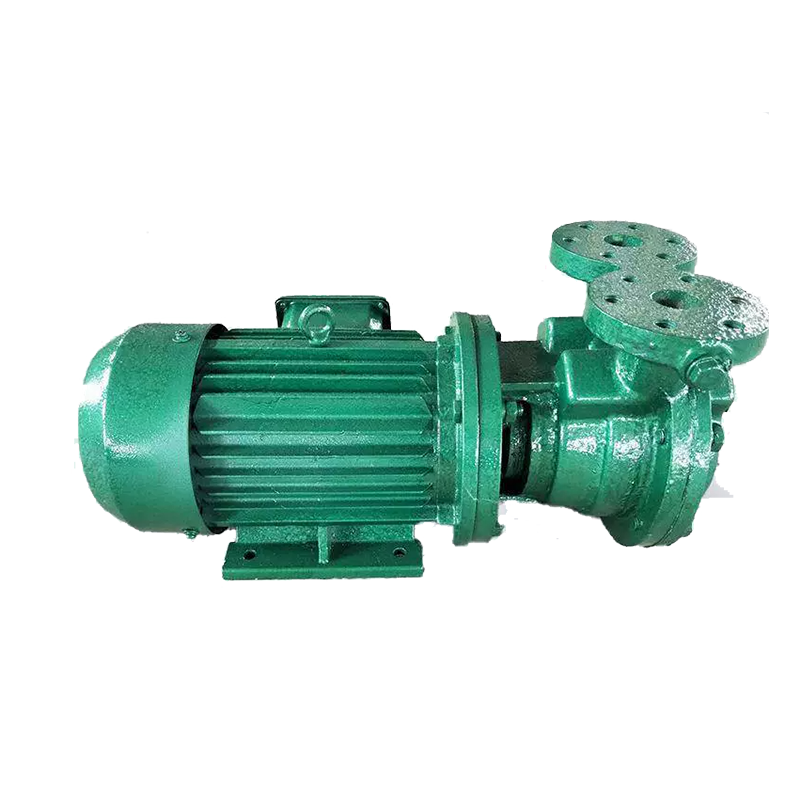
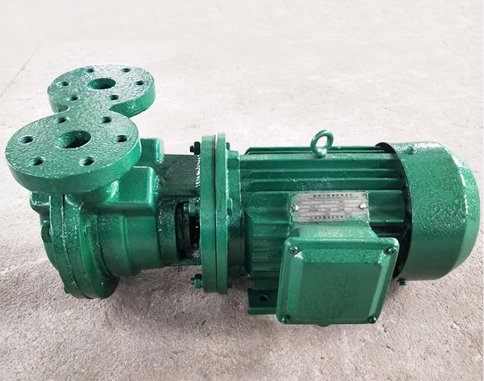
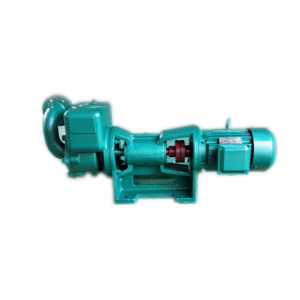
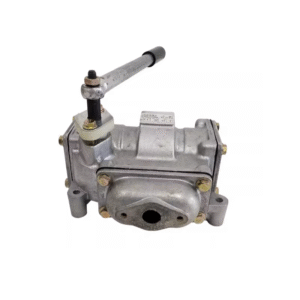
CXZ Series marine self-priming vortex pump
CXZ Series marine self-priming are applicable to pumping fresh and sea water for drinking washing and sanitary uses in vessels.
The pump rotates clockwise viewed from motor.
一、Pump model and performance parameters:
| Specifications and Models | 流量 m3/h |
扬程 m h2o |
吸入高度 m |
转速 r/min |
电机功率 kw |
泵质量 kg |
| 20CXZ-35 | 1 | 35 | 3 | 2900 | 0.75 | 52 |
| 32CXZ-25 | 3.5 | 28 | 3 | 2900 | 1.5 | 57 |
| 32CXZ-40 | 3 | 40 | 4 | 2900 | 2.2 | 57 |
| 40CXZ-30 | 9 | 30 | 4 | 2900 | 4 | 80 |
Why select a suction vortex pump?
Self-priming vortex pumps combine strong self-priming capability with high head, making them particularly suitable for the following marine applications:
* Bulch pumps: Pumping residual water from the bilge, which may contain small amounts of oil and air.
* Sanitary water pumps: Discharging domestic sewage.
* Daily seawater/freshwater pressurization: Supplying water from lower-level daily storage tanks to higher levels.
* Diesel fuel delivery: Supplying fuel from oil drums or lower-level fuel tanks to the main engine and generator.
1. Confirm Core Performance Parameters
Self-priming Performance & Self-priming Time:
This is the most important indicator. Inquire with the supplier about the “self-priming time” required to reach the rated flow rate under standard operating conditions (e.g., suction lift 5-6 meters). This is typically between tens of seconds and two minutes. Shorter time is better.
Maximum Self-priming Height: Theoretically, it can reach 5-8 meters, but in practical applications, considering pipeline losses, it is recommended to keep it within 4-5 meters.
Flow Rate and Head: Vortex pumps are characterized by low flow rates and high heads. Determine based on your system requirements.
Note: The performance curve of a self-priming vortex pump shows a higher head in the low flow rate range, but prolonged operation with the outlet valve completely closed should be avoided to prevent liquid overheating.
Media Characteristics:
Cleanliness: Although it is more tolerant than ordinary vortex pumps, it is still not an impurity pump. It can only tolerate trace amounts of fine, soft particles. If the medium contains a large amount of solid particles (such as silt), a filter must be installed in the suction pipe.
Corrosivity: When conveying seawater, diesel fuel, domestic sewage, etc., corrosivity must be considered.
2. Special Requirements for Structure and Materials
Pump Body and Impeller Materials:
Seawater/Oily Wastewater: Stainless steel (e.g., 304, 316L) or bronze are preferred.
Diesel Diesel Pumping: Cast iron (low cost) or stainless steel are acceptable. Ensure material compatibility with the medium.
Sanitary Water Pumps (Domestic Sewage): Stainless steel is recommended for its ease of cleaning and corrosion resistance.
Sealing Type (Crucial):
Mechanical Seal: The preferred choice for marine applications, with low leakage, long lifespan, and extended maintenance-free periods. Ensure its material (e.g., silicon carbide/ceramic matte surface) can withstand the pumped medium.
Stuffing Seal: Inexpensive and resistant to minor wear, but may leak slightly, requiring periodic adjustment or replacement. Not recommended in situations where leakage is unacceptable (e.g., engine room bottom).
Reservoir and Gas-Liquid Separation Chamber: Self-priming pumps have a built-in reservoir for initial priming and gas-liquid separation during self-priming. Ensure a reasonable structural design and high self-priming efficiency.
3. Marine Environmental Compatibility
Classification Society Certification: For critical marine systems, pumps must be certified by relevant classification societies, such as China CCS, USA ABS, Norway DNV, and Germany GL. This is a guarantee of safety and quality.
Motor Characteristics:
Explosion-proof Rating: If used for conveying fuel oil or located in hazardous areas (such as the engine room), the motor must meet explosion-proof standards (such as Ex d IIC T4).
Protection Rating: At least IP55 to prevent water and dust ingress. IP56 or higher is recommended to withstand harsh environments such as deck washing.
Voltage and Frequency: Match the marine electrical system; common values are 380V/50Hz, 440V/60Hz, etc.
Installation and Connection: Confirm that the installation method (base-mounted/flange-mounted), inlet/outlet diameter, and direction are compatible with the ship’s piping layout.
4. Brand, Maintenance, and Economy
Brand and After-sales Service: Choose a brand with a good reputation in the marine industry to ensure that spare parts and technical support are available in ports worldwide.
Ease of maintenance: Check whether the pump is easy to disassemble and repair, and whether it is convenient to replace the mechanical seal or impeller.
Selection Process Summary
Define Operating Conditions: Clearly define “what to pump (medium), how much to pump (flow rate), how high to pump (head), and from where to pump (priming height).”
Example: Used as a bilge pump to pump seawater containing a small amount of oil. The required flow rate is 8 m³/h, the required head is 60 meters, and the priming height is approximately 4 meters.
Initial Pump Selection: Based on the flow rate-head parameters, find the corresponding point on the performance curve of the self-priming vortex pump to confirm the model.
Material and Sealing Verification: Select a 316 stainless steel pump body and an oil-resistant mechanical seal based on the medium (oil-containing seawater).
Certification and Motor Check: Confirm CCS certification, IP56 motor protection rating, and explosion-proof rating meeting engine room requirements.
Installation Details Confirmation: Verify flange standards, base dimensions, and motor rotation direction.
Important Notes: Priming is mandatory for first start-up: Although called “self-priming,” the pump chamber must be filled with liquid (storage chamber) before the first start-up. Do not dry run: Even with self-priming capability, prolonged dry running will damage the mechanical seal and pump.
Regular checks: Check the liquid level in the reservoir and perform regular maintenance on the mechanical seal and filter.

Reviews
There are no reviews yet.