 Skip to content


Description
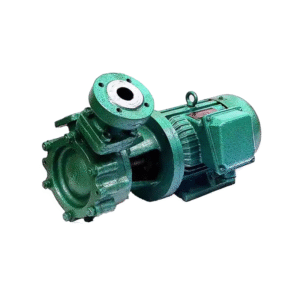
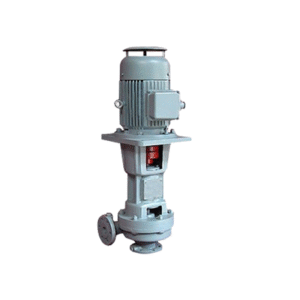
Marine centrifugal vortex pump
I. Overview The CWX centrifugal vortex pump is suitable for pumping drinking water, washing water, and fresh water and seawater for sanitation in marine equipment.
II. Main performance parameters of the pump
| model | flow | 扬程 (m) | rotational speed (r/min) | motor power (kw) | Allow high absorption (m) | Remark | |
| (m3/h) | (l/s) | ||||||
| 1.5CWX-2 | 3 | 0.83 | 40 | 2900 | 2.2 | 4 | direct motor connection |
| 1.5CWX-2A | maximum(8m) | With bracket | |||||
| 1.5CWX-3 | 6.5 | 1.8 | 35 | 2900 | 3 | 4 | direct motor connection |
| 1.5CWX-3A | maximum(8m) | With bracket | |||||
| 1.5CWX-4 | 10 | 2.8 | 35 | 2900 | 4 | 4 | direct motor connection |
| 1.5CWX-4A | maximum(8m) | With bracket | |||||
How to select a marine centrifugal vortex pump?
When selecting marine centrifugal vortex pumps, multiple factors need to be considered to ensure that the pump’s performance, reliability, and applicability meet the specific needs of the vessel. The following is a detailed selection guide:
I. Detailed Confirmation of Operating Parameters
Media Type and Characteristics
Is it seawater, fresh water, fuel oil, lubricating oil, coolant, or sewage?
Media temperature range (common seawater temperatures are generally ≤40℃; special cases must be communicated to the manufacturer).
Does the media contain suspended solids or particles? If so, what are the particle size and concentration? High sand content requires the selection of wear-resistant materials and structures.
Media viscosity and corrosiveness; for highly corrosive media, stainless steel or copper alloy materials should be selected.
Design Flow Rate (Q) and Head (H)
Accurately determine the required flow rate of the system, typically in m³/h.
Calculate the total head (pressure) of the system, including static pressure difference and pipeline and water resistance losses.
Operating Pressure
Estimate the pump outlet pressure to ensure the pump body and seals can withstand the maximum operating pressure.
Environmental Conditions
Marine vibration, sloshing, and corrosion-resistant environment.
Is explosion-proof and fire-proof design required? II. Pump Structure and Material Selection
Pump Body and Impeller Materials
Seawater Applications: Bronze alloys (e.g., aluminum bronze), 304/316 stainless steel, titanium alloys, etc. are recommended.
Non-corrosive Media: Cast iron is optional.
For media containing sand or abrasives, use hard alloy wear-resistant materials or add bushing protection.
Seal Type
Mechanical Seal (Recommended): Reduces leakage, suitable for seawater and hazardous liquids. Note that the selected mechanical seal material (silicon carbide, ceramic, fluororubber, etc.) should be resistant to media corrosion.
Stuffing Seal: Easy maintenance, low cost, but poses a risk of leakage to the environment.
Bearing Type
Use rolling bearings (ball bearings, tapered roller bearings) or sliding bearings. Select sealed bearings adapted to ship vibration.
Heat Dissipation Method
Confirm the heat dissipation method for the pump bearings and seals to ensure that the temperature does not exceed the limit during long-term operation.
III. Performance Parameters and Operating Condition Analysis
Performance Curve Matching
Pump performance curves are required to confirm whether the design flow rate point corresponds to the head within the pump’s high-efficiency operating range.
Avoid oversized or undersized pumps to prevent dry running, cavitation, and increased vibration.
Head Margin
It is recommended to design with a 10-20% head margin to ensure normal operation of the pump under harsh conditions.
Operating Condition Fluctuations
If flow rate varies significantly, consider a variable speed pump or a frequency converter.
IV. Drive Method and Installation Requirements
Drive Method
Marine Motors: Three-phase asynchronous motors with a protection rating of IP56 or higher; explosion-proof rating must comply with classification society requirements.
Hydraulic or diesel engine drives are suitable for applications far from power supply.
Couplings and Installation
Use flexible couplings or couplings to reduce transmission vibration.
During installation, ensure proper alignment to avoid bearing damage.
Allow sufficient space for maintenance.
Pipeline Interfaces
Standard flange dimensions should conform to national standards, marine regulations, or custom requirements.
The inlet design should be reasonable, accommodating minimal bends in the pipeline to prevent pulsation and cavitation.
V. Maintenance and Warranty
* Easy Replacement of Wear Parts
Shaft seals and bearings should be easily disassembled and replaced, with corresponding spare parts provided.
A soft-start device can be considered to reduce mechanical shock.
Manufacturer After-Sales and Technical Support
Choose manufacturers with experience in marine pumps, classification society certification, and a comprehensive after-sales service system.
Equipment warranty period, technical training, safe operation guidance, and remote support.
VI. Compliance with Marine Standards
Obtain classification society certifications for pump products, such as China Classification Society (CCS), Det Norske Veritas (DNV), American Bureau of Shipping (ABS), and Lloyd’s Register (LR).
Comply with marine special equipment specifications, with clear indicators for vibration resistance, corrosion resistance, fire resistance, and explosion protection.
VII. Practical Case Example
* Suppose an ocean-going cargo ship needs to purchase a seawater cooling pump:
Medium: Seawater, temperature 30℃, containing trace amounts of sediment.
Flow rate: 60 m³/h.
Head: 25 m.
Pump material: Aluminum bronze pump body, aluminum bronze impeller.
Mechanical seal: Silicon carbide surface mechanical seal.
Motor: Explosion-proof ExdⅡCT4 three-phase asynchronous motor.
Mounting flange: Meets classification society standard DN100.
Spare bearings and seals are readily available for easy maintenance and replacement at sea.
The supplier provides classification society approval certificates and technical documents.


Reviews
There are no reviews yet.