 Skip to content

Description
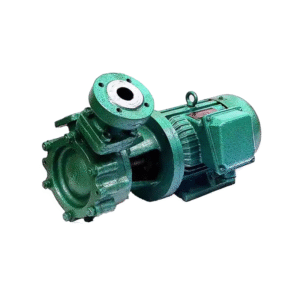
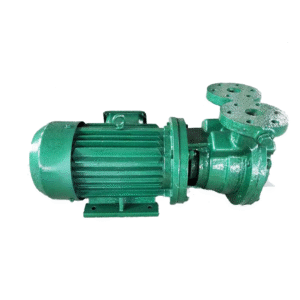
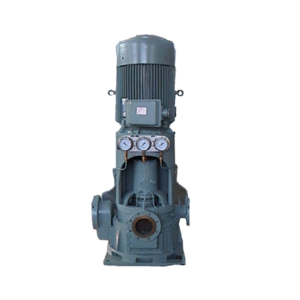
CLH series marine vertical centrifugal pump
CLH Series marine pumps are used at cabin bottom to cool
water and fight fire. It is able to carry sea water under 80 degree fresh water and other non-eroding liquid.
Pump Number,s meanings:
A figure the first cut impeller, B figure the second, C figure the third.
Z figure Direct-drive transmission structural mode, if the one is no Z in the model number , figures that Indirect-drive transmission structure mode. It must be droved by an intermediate coupling. It is easy to disassemble and maintain.
一、Main Technical Performance Parameters
| 序号 | 型号 | 流量 m3/h | 扬程 m | 电机功率 Kw | 转速 r/min | (NPSH)r m |
| 1 | CLH25-25-6.5(Z) | 3 | 8 | 0.37 | 2950 | 4.0 |
| 2 | CLH25-25-6.5(Z)A | 2.7 | 6.5 | 0.37 | 2950 | 4.0 |
| 3 | CLH40-32-2(Z) | 5 | 45 | 3 | 2950 | 4.0 |
| 4 | CLH40-32-2.5(Z) | 10 | 60 | 5.5 | 2950 | 4.0 |
| 5 | CLH40-32-3(Z) | 10 | 45 | 4.0 | 2950 | 4.0 |
| 6 | CLH40-32-3.5(Z) | 5 | 25 | 1.5 | 2950 | 4.0 |
| 7 | CLH40-32-5(Z) | 10 | 25 | 2.2 | 2950 | 4.0 |
| 8 | CLH50-32-2(Z) | 12.5 | 80 | 11 | 2950 | 3.0 |
| 9 | CLH50-32-2(Z)A | 11.7 | 70 | 7.5 | 2950 | 3.0 |
| 10 | CLH50-32-2(Z)B | 10.8 | 60 | 5.5 | 2950 | 3.0 |
| 11 | CLH50-32-3(Z) | 12.5 | 65 | 7.5 | 2950 | 3.0 |
| 12 | CLH50-32-3.5(Z) | 12.5 | 50 | 5.5 | 2950 | 3.2 |
| 13 | CLH50-32-3.5(Z)A | 10 | 45 | 4.0 | 2950 | 3.5 |
| 14 | CLH50-32-4.5(Z) | 12.5 | 32 | 3 | 2950 | 3.0 |
| 15 | CLH50-32-4.5(Z)A | 10 | 28 | 2.2 | 2950 | 3.0 |
| 16 | CLH50-32-6.5(Z) | 12.5 | 20 | 2.2 | 2950 | 2.5 |
| 17 | CLH50-40-7(Z) | 20 | 25 | 4 | 2950 | 4.0 |
| 18 | CLH50-50-4.5(Z) | 20 | 45 | 5.5 | 2950 | 5.0 |
| 19 | CLH50-50-4.5(Z)A | 18.6 | 38.5 | 5.5 | 2950 | 5.0 |
| 20 | CLH65-40-2.5(Z) | 25 | 125 | 30 | 2950 | 3.0 |
| 21 | CLH65-40-2.5(Z)A | 25 | 110 | 22 | 2950 | 3.0 |
| 22 | CLH65-40-2.5(Z)B | 22.7 | 103 | 22 | 2950 | 3.0 |
| 23 | CLH65-40-2.5(Z)C | 21.4 | 92 | 18.5 | 2950 | 3.0 |
| 24 | CLH65-40-3(Z) | 25 | 80 | 15 | 2950 | 4.0 |
| 25 | CLH65-40-3(Z)A | 23 | 70 | 11 | 2950 | 4.0 |
| 26 | CLH65-40-4(Z) | 25 | 65 | 11 | 2950 | 4.0 |
| 27 | CLH65-40-4.5(Z) | 25 | 50 | 7.5 | 2950 | 3.0 |
| 28 | CLH65-40-4.5(Z)A | 23 | 45 | 7.5 | 2950 | 3.0 |
| 29 | CLH65-50-6.5(Z) | 25 | 32 | 5.5 | 2950 | 3.0 |
| 30 | CLH65-50-6.5(Z)A | 23.4 | 28 | 4.0 | 2950 | 3.0 |
| 31 | CLH65-50-6.5(Z)B | 21.7 | 24 | 3.0 | 2950 | 3.0 |
| 32 | CLH65-50-8.5(Z) | 30 | 25 | 5.5 | 2950 | 4.0 |
| 33 | CLH65-50-9(Z) | 25 | 20 | 3 | 2950 | 3.0 |
| 34 | CLH65-50-9(Z)A | 23.8 | 17.6 | 2.2 | 2950 | 3.0 |
| 35 | CLH65-65-5.5(Z) | 30 | 45 | 7.5 | 2950 | 4.0 |
| 36 | CLH65-65-5.5(Z)A | 23.4 | 44 | 5.5 | 2950 | 4.0 |
| 37 | CLH65-65-5.5(Z)B | 21 | 35.3 | 4.0 | 2950 | 4.0 |
| 38 | CLH80-50-3.5 | 50 | 125 | 37 | 2950 | 3.5 |
| 39 | CLH80-50-3.5A | 47.7 | 114 | 37 | 2950 | 3.5 |
| 40 | CLH80-50-3.5B | 45.4 | 103 | 30 | 2950 | 3.5 |
| 41 | CLH80-50-3.5C | 42 | 88.5 | 22 | 2950 | 3.5 |
| 42 | CLH80-50-4 | 60 | 85 | 30 | 2950 | 4.0 |
| 43 | CLH80-50-4.5 | 50 | 80 | 22 | 2950 | 3.5 |
| 44 | CLH80-50-4.5A | 46.8 | 70 | 18.5 | 2950 | 3.5 |
| 45 | CLH80-50-5 | 50 | 65 | 18.5 | 2950 | 4.0 |
| 46 | CLH80-50-5A | 46.5 | 56 | 15 | 2950 | 4.0 |
| 47 | CLH80-50-6.5 | 50 | 50 | 15 | 2950 | 3.0 |
| 48 | CLH80-50-6.5A | 46.8 | 44 | 11 | 2950 | 3.0 |
| 49 | CLH80-50-6.5B | 43.3 | 38 | 7.5 | 2950 | 3.0 |
| 50 | CLH80-50-7(Z) | 50 | 45 | 15 | 2950 | 3.5 |
| 51 | CLH80-50-7(Z)A | 46.5 | 39 | 11 | 2950 | 3.5 |
| 52 | CLH80-65-5.5(Z) | 50 | 60 | 18.5 | 2950 | 3.5 |
| 53 | CLH80-65-5.5(Z)A | 46.5 | 51.5 | 15 | 2950 | 4.0 |
| 54 | CLH80-65-9(Z) | 50 | 32 | 7.5 | 2950 | 3.0 |
| 55 | CLH80-65-9(Z)A | 46.8 | 28 | 7.5 | 2950 | 3.0 |
| 56 | CLH80-65-9(Z)B | 42 | 22 | 4.0 | 2950 | 3.0 |
| 57 | CLH80-65-11(Z) | 50 | 25 | 7.5 | 2950 | 3.5 |
| 58 | CLH80-65-13(Z) | 50 | 20 | 5.5 | 2950 | 3.0 |
| 59 | CLH80-65-13(Z)A | 46.7 | 16.6 | 4.0 | 2950 | 3.0 |
| 60 | CLH100-65-5 | 100 | 125 | 75 | 2950 | 5.0 |
| 61 | CLH100-65-5A | 95.5 | 114 | 55 | 2950 | 5.0 |
| 62 | CLH100-65-5B | 90.8 | 103 | 45 | 2950 | 5.0 |
| 63 | CLH100-65-5C | 85.8 | 92 | 45 | 2950 | 5.0 |
| 64 | CLH100-65-5.5 | 100 | 100 | 55 | 2950 | 5.0 |
| 65 | CLH100-65-7(Z) | 70 | 60 | 22 | 2950 | 4.0 |
| 66 | CLH100-65-7(Z)A | 65 | 52 | 18.5 | 2950 | 4.0 |
| 67 | CLH100-65-8 | 100 | 60 | 30 | 2950 | 4.8 |
| 68 | CLH100-65-9A | 80 | 40 | 18.5 | 2950 | 4.5 |
| 69 | CLH100-65-10(Z) | 100 | 45 | 22 | 2950 | 5.0 |
| 70 | CLH100-65-10(Z)A | 86 | 38 | 15 | 2950 | 5.0 |
| 71 | CLH100-80-6 | 100 | 90 | 45 | 2950 | 5.0 |
| 72 | CLH100-80-6.5 | 100 | 80 | 37 | 2950 | 5.0 |
| 73 | CLH100-80-13(Z) | 70 | 25 | 11 | 2950 | 4.0 |
| 74 | CLH100-80-13 | 100 | 32 | 15 | 2950 | 4.0 |
| 75 | CLH100-80-13A | 93.5 | 28 | 11 | 2950 | 4.0 |
| 76 | CLH100-80-13B | 82.4 | 21.7 | 11 | 2950 | 4.0 |
| 77 | CLH100-80-19(Z) | 100 | 20 | 11 | 2950 | 4.0 |
| 78 | CLH100-80-19(Z)A | 93 | 17 | 7.5 | 2950 | 4.5 |
| 79 | CLH100-100-8.5(Z) | 70 | 45 | 18.5 | 2950 | 4.5 |
| 80 | CLH100-100-6 | 80 | 80 | 37 | 2950 | 4.0 |
| 81 | CLH125-100-8 | 150 | 80 | 55 | 2950 | 5.0 |
| 82 | CLH125-100-6.5 | 150 | 110 | 75 | 2950 | 5.0 |
| 83 | CLH125-100-10 | 125 | 20 | 11 | 1450 | 4.5 |
| 84 | CLH125-100-11 | 160 | 65 | 55 | 2950 | 5.0 |
| 85 | CLH125-100-12 | 160 | 50 | 37 | 2950 | 5.5 |
| 86 | CLH125-100-13 | 200 | 50 | 45 | 2950 | 4.5 |
| 87 | CLH125-100-17(Z) | 120 | 25 | 15 | 2950 | 5.5 |
| 88 | CLH125-100-17(Z)A | 114 | 22 | 11 | 2950 | 5.5 |
| 89 | CLH125-100-17 | 160 | 32 | 22 | 2950 | 5.0 |
| 90 | CLH125-100-17A | 150 | 28 | 18.5 | 2950 | 5.0 |
| 91 | CLH125-125-7 | 120 | 80 | 45 | 2950 | 4.0 |
| 92 | CLH150-125-4 | 265 | 86 | 110 | 1450 | 4.5 |
| 93 | CLH150-125-6 | 300 | 62 | 75 | 1450 | 5.5 |
| 94 | CLH150-125-10 | 250 | 32 | 37 | 1450 | 7.5 |
| 95 | CLH150-125-22(Z) | 200 | 25 | 22 | 2950 | 7.0 |
| 96 | CLH200-150-12 | 320 | 32 | 45 | 1450 | 5.0 |
| 97 | CLH200-150-9 | 250 | 100 | 110 | 2950 | 7.0 |
| 98 | CLH250-200-18 | 400 | 20 | 37 | 1450 | 5.0 |
| 99 | CLH250-250-18 | 720 | 25 | 75 | 1450 | 6.0 |
| 100 | CLH250-250-19 | 550 | 20 | 55 | 1450 | 6.0 |
| 101 | CLH250-250-30 | 630 | 15 | 45 | 1450 | 6.0 |
| 102 | CLH400-350-40 | 1000 | 10 | 55 | 960 | 8.5 |
Why choose a vertical centrifugal pump?
The main advantages of vertical centrifugal pumps on ships are space saving and suitability for specific suction conditions.
Space saving: With the motor on top and the pump body below, the compact structure is ideal for areas with dense equipment and limited space, such as engine rooms.
Easy suction: Common vertical multistage centrifugal pumps have strong suction capacity, making them ideal as fire pumps, main pumps, bilge pumps, etc. Their first-stage impeller can be designed in a very low position, enabling suction of low-level liquid tanks.
Submersible pump type: Some vertical pumps (submersible pumps) can be directly inserted into liquid tanks (such as ballast tanks and sludge tanks) without the need for priming or self-priming.
Key Steps and Considerations for Pump Selection
1. Clarify Usage Needs and Pump Type
First, determine the specific type of vertical pump you need, as this directly determines its capacity and application scenario.
Media Characteristics:
Clean Liquids: Such as seawater and fresh water, standard closed impellers can be used.
Slight Impurities: Such as bilge water (may contain oil and small amounts of silt), requiring a submersible sludge pump with an open or semi-open impeller, ensuring that the particle throughput meets requirements.
Corrosivity: Seawater requires corrosion-resistant materials.
Flow Rate and Head: Centrifugal pumps are characterized by medium flow rate and medium head. Vertical multistage centrifugal pumps can achieve very high single-pump heads, meeting the high-pressure requirements of ship fire-fighting systems, etc.
Determine the operating point (Q, H) based on the system design.
Installation and Liquid Level Relationship (Decisive Factor):
Dry Installation (Most Common): The pump body is installed on the bilge or platform, with the impeller located inside the pump casing, operating based on the pump’s suction capacity. Commonly used for fire pumps, bilge pumps, and ballast pumps. The key parameter is the required net positive suction head (NPSHr).
Wet installation (submersible pump): The pump body is relatively long and operates directly submerged in the liquid (e.g., ballast tanks, sludge tanks). There is no need to consider suction issues or cavitation, and no priming is required before startup. Commonly used for ballast pumps, bilge pumps, and sludge pumps.
2. Special Requirements for Structure and Materials
Pump Body and Wet-Flow Components Materials:
Seawater: Bronze and stainless steel (316/316L) are standard. Cast steel may be used for large pumps or in cost-sensitive applications where the medium is fresh water/oil.
Bilt/Sewage: Stainless steel is recommended for better corrosion resistance and wear resistance.
Oil: Cast iron or cast steel.
Shaft Seal Type (Key to Dry Pumps):
Mechanical Seal: Absolutely the mainstream and preferred choice. Low leakage and long service life.
For seawater pumps, the friction pair of the mechanical seal should be made of corrosion-resistant and wear-resistant materials, such as silicon carbide to silicon carbide.
A flushing system can be installed to extend seal life.
Stuffing Seal: Now less commonly used, only seen in some older ships or special applications. Due to its continuous slight leakage, it is not suitable for places where leakage is not allowed, such as engine rooms.
Bearing Arrangement and Lubrication: The bearings of vertical pumps need to withstand radial and axial forces (especially the weight of the rotor).
Thrust bearing: Crucially important, it must withstand the weight of the entire rotor and the hydraulic axial thrust. It is typically located at the top of the motor or pump.
Lubrication: Grease lubrication (simple) or oil lubrication (good heat dissipation, used under heavy loads).
Shaft and long shaft systems: For long-shaft vertical pumps (especially submersible pumps), shaft rigidity and alignment are critical to prevent excessive deflection and vibration during operation.
Shaft material is typically stainless steel to prevent corrosion and wear.
3. Marine Environmental Compatibility
Classification Society Certification (Mandatory): The pump and motor, as a single unit, must obtain type approval from the required classification society, such as CCS, DNV, ABS, LR, etc. This is the bottom line for ensuring safety and quality.
Motor Characteristics:
Protection Class: At least IP55; IP56/IP66 is recommended if installed in environments with potential erosion or moisture.
Insulation Class: Typically Class F, ensuring reliable operation in high temperature and high humidity environments.
Voltage and Frequency: Matching the ship’s electrical system (e.g., 380V/50Hz, 440V/60Hz).
Explosion-proof Requirements: If installed in hazardous areas, an explosion-proof motor must be selected.
Vibration and Noise: Vertical pumps have good stability, but manufacturing precision and good dynamic balance must be ensured to avoid vibration.
For long-shaft pumps, pay attention to their critical speed and avoid operation in the resonance zone.
4. Brand, Maintenance, and Economy
Reliable Brands and After-Sales Service: Choose brands with extensive experience in the marine industry to ensure global technical service and spare parts support.
Maintenance Ease: Check if the motor and top bearing are easy to lubricate or change grease.
For dry-mounted pumps, check if the mechanical seal can be easily replaced without disassembling the entire piping.
For submersible pumps, confirm the ease of lifting and extraction.
Selection Process Summary
Define Operating Conditions:
Example: Used as a main fire pump, pumping seawater, requiring a flow rate of 140 m³/h and a head of 150 meters. The pump house level is below the waterline, requiring water to be pumped from the sea.
Determine Pump Type:
Based on the high head and suction requirements, select a vertical multistage centrifugal pump (dry installation).
Check Key Parameters:
NPSH Verification: Calculate the system’s effective net positive suction head (NPSHa) to ensure it is significantly greater than the pump’s required net positive suction head (NPSHr). This is crucial for the success of suction pump selection.
Material Selection: 316L stainless steel is used for flow-through components, and silicon carbide is used for the mechanical seal.
Check Certifications and Motor:
Confirm certifications from target classification societies such as DNV/GL. Motor protection rating IP66, insulation class F.
Confirm Installation Details:
Verify flange standards, mounting dimensions, and motor rotation direction.
Vertical Pump Selection Considerations
Dry-mounted Pumps: Priming is mandatory for initial startup: Unless it’s a self-priming vertical pump (rare), the pump chamber and suction line must be filled with liquid before startup.
Strictly control the suction head: Rigorous NPSH calculations must be performed to avoid cavitation.
Submersible Pumps (Wet-mounted):
Ensure sufficient immersion depth: Prevent air intake during operation, which can cause turbulence and cavitation.
Pay attention to shaft deflection and bearing spacing: The intermediate bearing support design of long-shaft pumps is crucial for stability.


Reviews
There are no reviews yet.