
Description
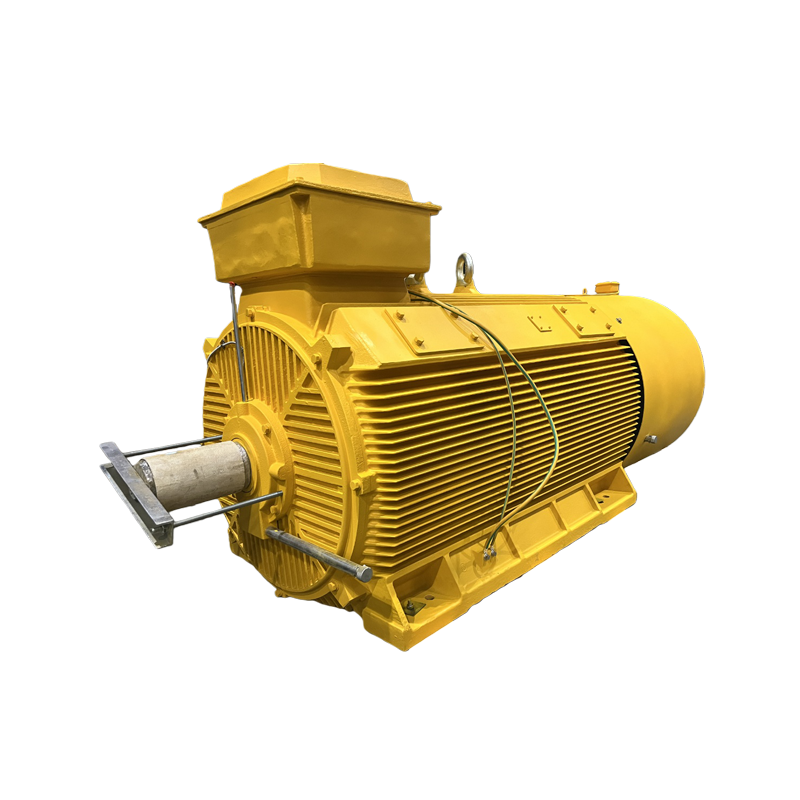
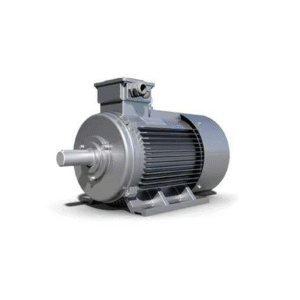
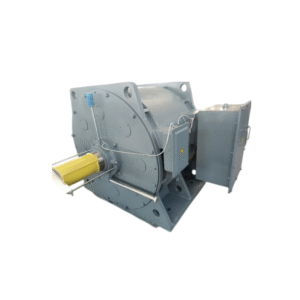
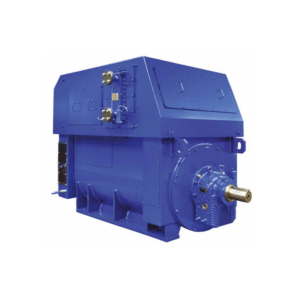
Specialized variable frequency speed-regulating permanent magnet synchronous motor for marine engineering lifting
Provides precise, efficient, and reliable core power for heavy-duty offshore lifting operations.
I. Product Strategic Positioning and Core Value This series of motors is specifically designed for cranes (main hook, auxiliary hook, stabilizing winch) on marine engineering vessels and platforms, aiming to meet the high-intensity, high-precision, and high-reliability lifting operation requirements in marine environments. We directly address the key challenges of marine lifting applications by providing solutions:
| Core Challenges of Offshore Lifting | Our Solution | Value created for customers |
|---|---|---|
| 1. Operational safety and precision control | – Zero-speed full torque: The motor can output 100% of its rated torque at zero speed, achieving precise hovering under heavy loads without the risk of “hook slippage.” – Ultra-high dynamic response: Torque response time < 5ms, speed control accuracy ≤ 0.1%, achieving millimeter-level micro-motion operation. – Seamless four-quadrant operation: High-efficiency energy feedback ensures smooth and controllable generator braking when lowering heavy objects.。 | Significantly improves the safety, precision, and stability of hoisting operations, ensuring the safety of personnel and goods.。 |
| 2. Extreme operating conditions and high reliability | – Reinforced Mechanical Structure: Designed to withstand frequent start-stop cycles and impact loads.
– Corrosion Resistance: IP56 protection; key components are made of stainless steel or have special coatings. – Wide Temperature Range Design: Suitable for ambient temperatures from -25°C to +55°C.。 |
Ensure stable operation under harsh sea conditions such as wind, waves, high humidity, and salt spray, and reduce downtime due to malfunctions.。 |
| 3. Energy efficiency and operating costs | – Ultra-high partial load efficiency: Maintains efficiency above 96% within a typical operating range of 20%-80%. Maintenance-free design: No brushes, slip rings, or gearbox, significantly reducing maintenance costs and time.。 | Compared to traditional wound-rotor asynchronous motors with gearboxes, energy consumption is reduced by 15%-30%, and the total lifecycle cost is lower.。 |
| 4. Space and weight limitations | – High power density: Permanent magnet direct drive or single-stage transmission, compact structure. Flexible installation: Multiple installation options including B3/B5, facilitating integration on decks or in engine rooms.。 | This saves valuable deck space and deadweight tonnage in ship design.。 |
| 5. System integration and intelligence | – Built-in high-precision encoder: Enables closed-loop control and accurate position feedback.
– Abundant sensor interfaces: Supports real-time monitoring of conditions such as temperature and vibration. – Standard communication protocol: Easily connects to crane PLCs and ship management systems.。 |
Simplifying the integration of electrical control systems provides a data foundation for predictive maintenance and intelligent operation.。 |
II. In-depth Technical Specifications and Parameter System
1. Model and Power/Torque Matching Table
Optimized design based on the different load and speed characteristics of the main hook, auxiliary hook, and stabilizing cable of the offshore crane.
| Lifting function | Recommended frame size | Continuous rated power (kW) | Peak/overload torque capability | base velocity (rpm) | Typical applications and features |
|---|---|---|---|---|---|
| stabilizing cable/auxiliary winch | 315 – 355 | 30 – 150 | 200% / 60秒 | 500 – 750 | Frequent adjustments require rapid response and precise control. |
| Secondary hook | H400 – H450 | 150 – 500 | 220% / 60秒 | 200 – 500 | Medium load, balancing speed and accuracy。 |
| main hook | H500 – H710 | 500 – 2000+ | 250% / 60秒 | 0 – 300 | The core of this low-speed, high-torque system is characterized by zero-speed hovering. It is typically directly connected to the drum or uses a single-stage planetary reduction gear.。 |
Note: For the main hook, “0 rpm” capability is the core indicator. We employ a special electromagnetic and cooling design to ensure the motor outputs rated torque continuously without overheating under stall conditions.
2. Core Performance Parameters
2.1 Electrical Characteristics
Rated Voltage (Un): 440V or 690V, matching the mainstream voltage levels of offshore engineering and marine power plants. The 690V option reduces current and saves cable costs.
Speed Range: 0 ~ 750 rpm continuously adjustable. Torque control is smooth and pulsation-free in the low-speed range (0-10% of rated speed).
Duty Cycle: Complies with S4 ~ S6 duty cycles (intermittent periodic duty cycle). Rated duty cycle (ED%) can be customized at 40%, 60%, or 100% to match actual lifting cycles.
Brake Integration (Optional): Built-in or flange-type disc electromagnetic brakes are available as a mechanical safety backup, achieving “zero-failure” safe stopping.
2.2 Mechanical and Torque Characteristics
Torque-Speed Curve:
Constant Torque Region (0 – Base Speed): Continuous output of rated torque, suitable for long-term operation.
Constant Power Region (Base Speed - Maximum Speed): Speed increase achieved through field weakening control; torque decreases as speed increases.
Overturning Torque: ≥ 2.8 times rated torque, instantaneous, meeting emergency braking or unexpected impact requirements.
Moment of Inertia (J): Optimized for crane inertia matching, ensuring rapid and stable dynamic response of the transmission system.
Shaft Extension and Connection: Employs thickened shaft extensions and high-strength keyways, or provides flanged outputs to withstand enormous radial and axial loads (from wire ropes).
3. Detailed Structural Design
3.1 Reinforced Design for Lifting Conditions
Base and End Covers: Constructed from high-strength cast iron or welded steel plates, with impact and deformation resistance verified through finite element analysis (FEA).
Bearing System: Employs heavy-duty rolling bearings (e.g., a combination of double-row cylindrical roller bearings and angular contact ball bearings), with a calculated life (L10h) > 40,000 hours. The bearing housing is reinforced.
Sealing: The shaft extension end uses a double-layer labyrinth seal or a V-type rotary shaft seal to prevent seawater and dust intrusion.
3.2 Permanent Magnet Rotor System
Magnetic Circuit Topology: Employs a surface-mounted (SPM) or integrated (IPM) design. SPM provides smoother torque and simpler control; IPM provides higher overload and field weakening capabilities.
Demagnetization Prevention Design: Employs high-coercivity magnets, and the electromagnetic design ensures a safety margin of ≥15% even at the highest operating temperature and maximum demagnetizing current (e.g., short circuit).
Rotor Temperature Monitoring (Optional): Can be integrated with a wireless temperature sensor to monitor the permanent magnet temperature in real time and prevent overheating and demagnetization.
4. Cooling System (IC Code) Configuration Offshore crane motors are typically installed in engine rooms or deck enclosures with limited ventilation.
IC411 (Self-ventilated, TEFC):
Suitable for: Auxiliary winches with lower power (<100kW) and shorter duty cycles (lower ED%).
Note: Ensure sufficient ambient air convection at the installation location.
IC416 (Forced Air Cooling, CACA):
Suitable for: The mainstream and recommended cooling method for offshore cranes, especially suitable for main and auxiliary hook motors of 100kW ~ 2000kW.
System Composition: Motor + Independent forced fan unit (usually explosion-proof) + air duct.
Advantages: Cooling capacity is decoupled from motor speed, providing full cooling airflow even at low speeds and stall, which is crucial for continuous operation at zero speed and full torque. The fan can be installed from the top or side of the motor, allowing for flexible placement.
Protection: The air inlet must be equipped with an easy-to-maintain dry air filter to prevent salt spray particles from entering.
5. Insulation, Protection, and Installation
Insulation System (H/F Class): Utilizes F or H class insulation with vacuum pressure impregnation (VPI). Class H provides a higher thermal safety margin, suitable for frequent overloads and high-temperature environments.
Protection Rating (IP):
IP54: For indoor machine rooms and controlled environments.
IP55/IP56: For open or semi-enclosed deck installations. IP56 is the recommended standard for marine splash and washout protection.
Mounting Method (IM):
B3: Foot mounting, flexible and versatile, requires a mounting base.
B5: Flange mounting, compact structure, rigid connection, easy to directly interface with gearboxes or drums, superior resistance to torsional vibration.
6. Deep Integration with Lifting Control Systems
This motor is designed as a “plug-and-play” intelligent drive unit.
Standard Feedback System: High-resolution multi-turn absolute encoder (e.g., 23-bit), installed on the non-drive end, provides precise speed and position feedback for closed-loop vector control.
Alternative Solution: Encoders with mechanical gearboxes are available for higher resolution position feedback and precision positioning.
Status Monitoring Interface: Standard configuration includes at least six PT100 encoders (three on the stator windings, one each on the front and rear bearings, and one for the environment).
Optional vibration sensor (accelerometer) interface.
Communication and Control: Control interface supports mainstream fieldbuses such as PROFIBUS DP, PROFINET, and CANopen.
The motor controller can integrate crane-specific function blocks, such as anti-sway, tension control, and collision protection.
III. Typical Application Configuration Scheme
Case Study: Main hook drive system of a 1200-ton crane pipelaying vessel
Requirements: Main hook lifting/lowering, safe load of 1200 tons, requiring smooth low-speed operation and reliable hovering at zero speed.
Solution:
Motor Configuration: Two H630-900kW permanent magnet synchronous motors, connected in parallel to drive the same drum.
Key Parameters: Rated speed 150 rpm, rated torque ~57 kNm, peak torque >140 kNm. Cooling method: IC416. Protection rating: IP56. Mounting method: B5 (flange connection to planetary gearbox).
Control System: Each motor is driven by an independent frequency converter, employing master-slave torque control to achieve power balance. Integrated load weight measurement and automatic tension control functions.
Value: Compared to traditional solutions, system efficiency is improved by 18%, maintenance intervals are extended by 2 times, and millimeter-level precision control under heavy loads is achieved.
IV. Certifications and Services
Main Certifications: Meets the specifications of major classification societies such as DNV, ABS, LR, and CCS for offshore lifting equipment. Optional ATEX/IECEx explosion-proof certification (for potentially explosive environments).
Type Testing: In addition to routine tests, S4/S6 duty cycle temperature rise test, frequent start-stop life test, and salt spray corrosion test are conducted.
In summary, we offer more than just a motor; we provide a complete drive solution that enhances the performance, safety, and economy of offshore cranes. Our engineering team is ready to tailor the optimal configuration for you.


Reviews
There are no reviews yet.